Last week, I had the opportunity to join a trade mission from the Netherlands to London, sharing best practices of how our cities preserve culture, empowering diasporic-led businesses, connected through cultural heritage. It was organized by Added Color with Black Tech Fest - Europe's largest innovation and culture conference - as it’s highlight.
There’s something magical that happens when melanin enters a space, because culture is currency and the diaspora holds its infrastructure..
With a group of 100 black entrepreneurs from Amsterdam and Rotterdam, our journey started in Brixton, home to one of my favorite museums - the amazing Black Cultural Archives, who from an activist vision record and preserve Black UK history.
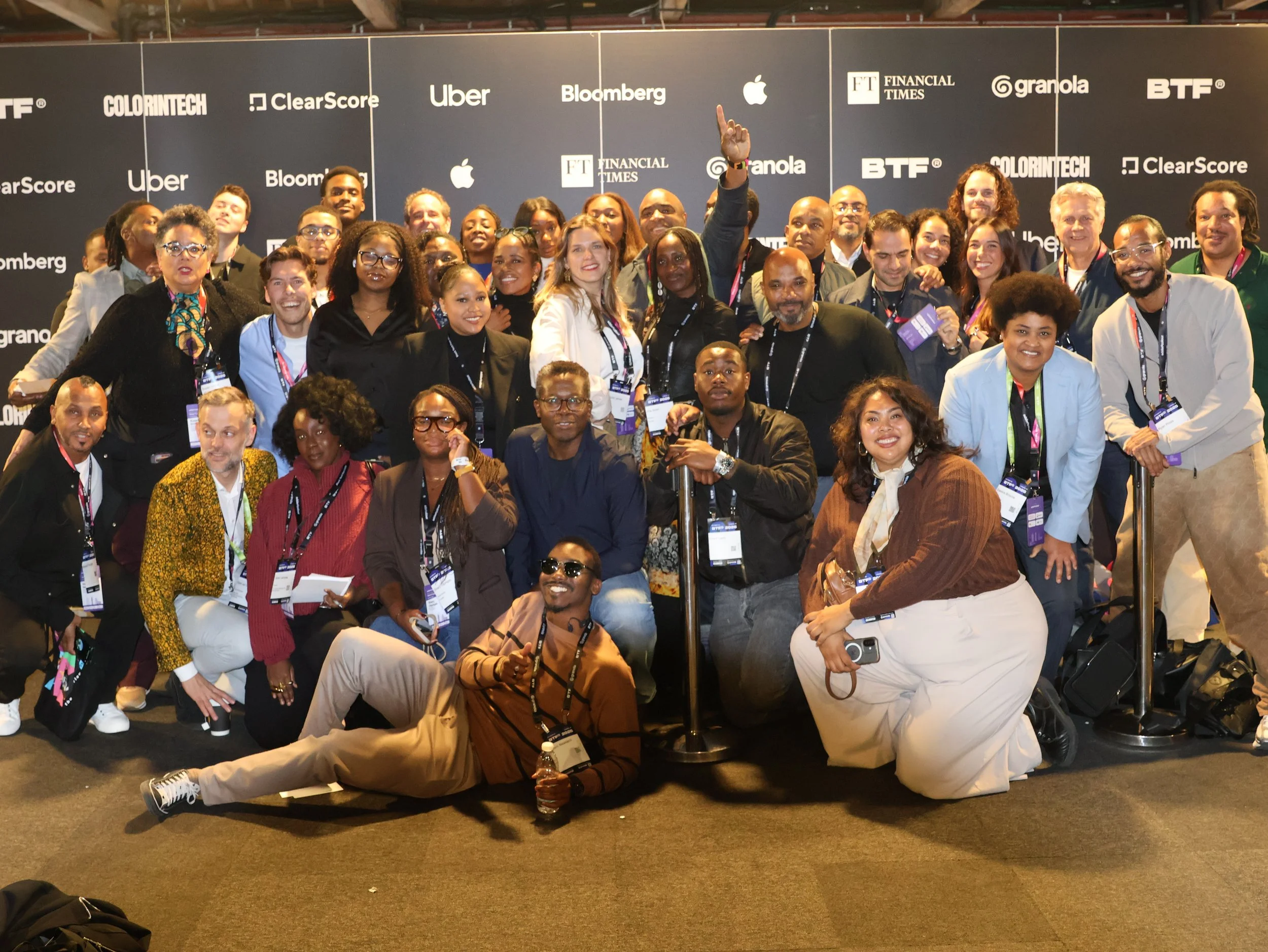
picture by Karen Cigarruista
We were taken to the historical Brixton Market where we got introduced to Impact Brixton and the Buy Back Brixton movement. This incredible community-led initiative is working towards buying back the historic market. It’s the largest UK asset ever brought into community ownership. The queen that shared her story with us, is currently a shop owner and described how she came to the market in her mother's womb. Buy Back Brixton has to raise 50 million and currently has 6.5M raised in funds with 500K raised in crowdfunding.
And I couldn't help but think about the bigger question: Why does preserving a cultural space have to be such an enormous financial battle in the first place? If the deputy mayor and city council is present, why aren’t they doing something about this?
It's something I recognize in Rotterdam, too. We see development happening everywhere, but development doesn't automatically equal progress. Buildings go up, neighbourhoods change, and the cultural and social fabric that made these places meaningful can slowly disappear. What happens when the people who give a place its identity can no longer afford to be part of its future?
Looking at the current political and economic climate; cities are increasingly struggling with the question of who they are actually being built for. I remember my first conversation of the day on the train from Rotterdam was dominated by two men in real estate. When one of the women started to talk about gentrification they quickly waved it away by changing the conversation to talking about the new building they bought. It was almost as if they were comparing new toys, whilst it’s about people’s lifes ya’know
Gentrification is bound to happen, but to fight back as a community is so powerful. Not simply because of the ambition, but because of what it represents: ownership, cultural preservation and communities taking responsibility for their own (economic) future. The Brixton Market isn’t just a marketplace where people buy: it’s a gathering point for different cultures, conversations and community.
I hate to say it but I don’t think Rotterdam could ever do something as big as this, as a culture we are too divided and it sometimes feels like the Netherlands purposely uses difficult systems to diffuse genuine connection. Just look at transport costs.
I often think back to when I was a part of organising the BLM-protest in 2020 and how our peaceful protest was disrupted by one call from mayor Abutaleb. With only 5 minutes left in our programme the municipality decided to cut it short, causing the thousands of peaceful protesting people to become a rowdy group. “We can’t even protest?!” were phrases we heard. If they had just let us finish in 5 minutes.. If they didn’t use drones to diffuse the sound of the speakers we had placed on the Erasmus bridge… And you can imagine what the headlines said afterwards.
If a municipality is supposed to be the people’s voice, whose voice do they really represent?
Yesterday I went to the launch of the new cultural advice commission (Cultuurhaven). There was something so powerful in seeing two Afro-Surinamese powerhouses in position: aldermen Joan Nunnely and president of the commission Raoul White, and the diverse new group that has been introduced. But after the first round of table conversations all I could think of was: “Oh, this feels like another research plan to prove the same thing that people have been saying for years now.” I will expand about this in my next episode of my podcast Rotterdam We Moeten Praten.
Culture is more than something we consume. It is something we create, protect, invest in and can build economies around, that is if it gets the position of actual importance rather than it being an afterthought.
During our exchange, we had three different perspectives to explore. I personally joined the conversation with the founder of Black Seed, who shared his journey of creating opportunities through access to capital. One thing that particularly stayed with me was his approach to growth. Sometimes scaling starts with simply having the courage to make the decision to be the revolution you search for by being living proof. And it is possible to do this within the community, but be prepared for its rocky road.
One moment that particularly stayed with me was that during the talk the student to my left was holding the Holy Bible. As I am currently working on expanding my business and my debut album I’ve been talking to God more to ensure that I stay walking in my purpose. It made me think about how “We walk by faith not by sight”, which to me sums up everything it is to be an entrepreneur in making an impact.
After a sublime lunch with food from the local vendors we visited Tottenham Hotspur Stadium, which was quite surreal considering I had previously been there to see Beyoncé. This time, I got to experience the building from an entirely different perspective.
I had many conversations: from an ambitious student who wants to be an ethical hacker when she graduates, to a multi-business owner who runs a bara shop with her daughters for fun to an entrepreneur who sold his business for 100M, to someone in finance who inspires many like her just by climbing the corporate ladder.
I am immensely grateful that I was able to be a part of this exchange and for all the conversations I had! Imaigne, I almost didn't go on this trip. It gave me hope, excitement and inspiration in a way I cannot describe.
The following day, we attended Black Tech Fest. But I’ll dive into this in a next blog post.
Did reading this post spark something? Let’s talk about it, drop me a message and let’s make something happen. Would you like to receive my updates straight in your inbox? Sign up for my occasional newsletter
